


Content cadence is how often, and on which channels, you publish — and getting it right is the difference between content that compounds and content that quietly drains your week. The honest answer to “how often should we post?” is “as often as you can stay consistent and useful,” but that’s not very actionable. So below are the real benchmarks for blogs, video, and social, how to set a cadence you can actually hold, and the one mistake that wastes most B2B content effort.
What is content cadence?
Content cadence is the rhythm of your publishing — which content types go out, on which platforms, how often, and when. It’s not a single number; it’s a schedule you can sustain that keeps your brand in front of the right audience without burning out the people making the content. A good cadence is consistent enough that the algorithm and your audience learn to expect you, and realistic enough that you never miss it.
How often should you publish blog content?
For B2B organic growth, 3–4 posts a week for a smaller blog and 4–5 a week (mixing new and refreshed posts) for an established one is the benchmark that consistently moves traffic. If your goal is brand awareness rather than raw traffic, you can post less — once or twice a month for a small blog — and spend the saved effort on depth and distribution. The variables that actually decide your number: your goal, your audience’s appetite, your resources, and the age and size of your blog.
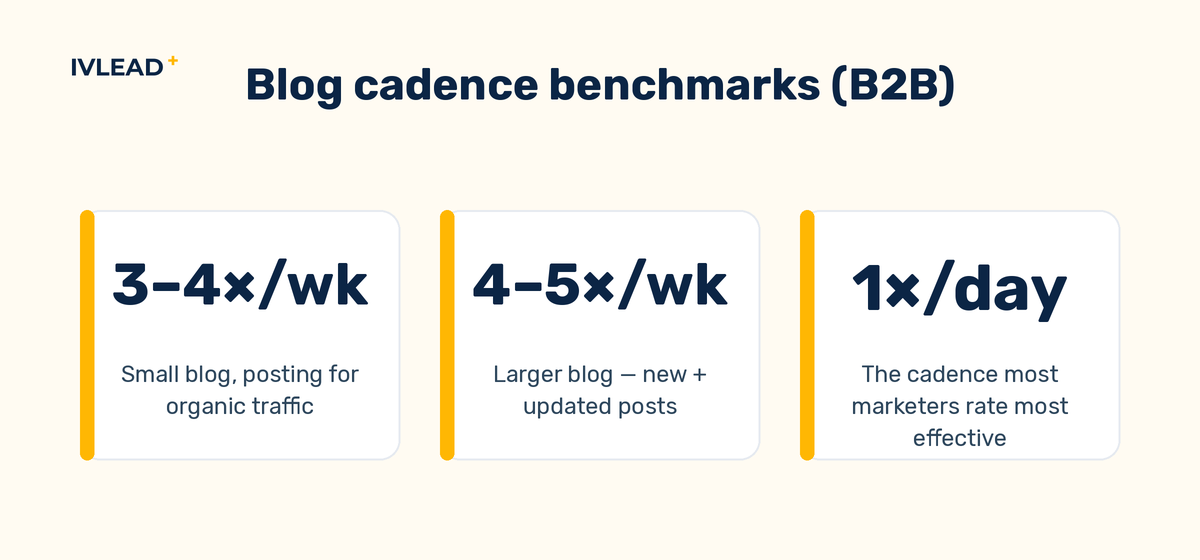
One nuance most cadence advice skips: for an established blog, updating existing posts counts as part of your cadence. Refreshing a page that already ranks often returns more than publishing a brand-new one — which is exactly the play behind this article.
How often should you post on social media?
It depends on the platform and when your audience is actually online, but sensible B2B starting points: LinkedIn 3–5×/week (your highest-value B2B channel — lead with it), X a few times a day if you have the volume, Instagram and Facebook a few times a week, and short-form video wherever your audience watches. Don’t spread yourself across six platforms at two posts a week each; pick the one or two where your buyers spend time and own them.
How often should you post video?
Video consumption keeps climbing and AI-driven search increasingly surfaces it, so it’s worth a real slot in your cadence. A workable rhythm: pair a short video with every blog post, publish to YouTube weekly (more if you can), and reuse cut-downs across your social channels. You don’t need a studio — concise, well-edited walkthroughs of one idea outperform polished-but-rare productions.
How do you set a content cadence you can actually keep?
Work through it in order rather than guessing a number: understand your audience and goal, decide your topics and formats, choose the platforms where your buyers actually are, set a frequency and timing you can sustain, then build a calendar and treat it as a living experiment.
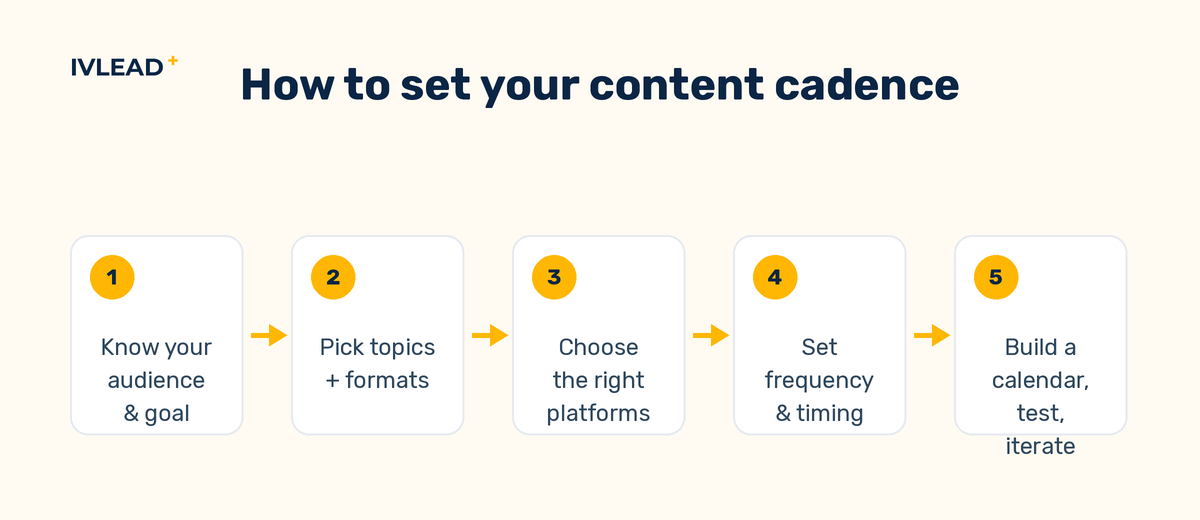
Start small and expand — one platform, a frequency you’re sure you can hold — then add as the habit sticks. The teams that win at content aren’t the ones who post most; they’re the ones who post usefully, on schedule, for long enough to compound.
What’s the most common content-cadence mistake?
Chasing frequency over consistency. A blog that posts five times one week and goes dark for a month teaches the algorithm and the audience to ignore it. Three good posts a week, every week, beats a sporadic firehose every time. The second most common mistake is running it all by memory instead of a calendar — without one, the moving parts (topics, formats, channels, timing) quietly fall apart.
The IV-Lead take
For B2B teams, cadence is a system problem, not a willpower problem. The teams that stay consistent are the ones whose calendar, drafts, approvals, and publishing live in one place they actually look at — not scattered across docs, inboxes, and someone’s head. That’s the difference between a cadence that holds for a quarter and one that holds for years. Set the rhythm to what you can sustain, run it from a real calendar, and measure what each channel returns so you can pour effort into what works.
Want your content engine — calendar, workflow, and reporting — running in one place instead of six? Book a 30-minute audit and we’ll show you where your content operation is leaking time. See also how we approach marketing automation and SEO & content.
Frequently asked questions
How often should a B2B company publish blog posts?
For organic growth, 3–4 posts a week for a newer blog and 4–5 (new plus refreshed) for an established one. For brand awareness, less is fine — once or twice a month done well beats a daily grind you can’t sustain.
Is it better to post more often or more consistently?
More consistently. A steady, predictable cadence compounds; an erratic one — even at higher volume — trains your audience and the algorithm to tune you out.
How often should we post on LinkedIn for B2B?
3–5 times a week is a strong B2B baseline. It’s usually your highest-value channel, so if you only resource one social platform properly, make it LinkedIn.
Does updating old posts count toward our cadence?
Yes — especially for established blogs. Refreshing a post that already ranks often returns more than a brand-new one, so build updates into your schedule, not just net-new content.