


The headline trend in B2B sales isn’t a single statistic — it’s that the buyer arrives already informed, the deal involves more people than it used to, and the rep’s job has shifted from presenting information to helping someone decide. Below is the practitioner’s read on what’s actually changed in how B2B teams sell, which old habits stopped working, and what to put in place so your team sells the way buyers now buy.
How has the B2B sales rep’s role changed?
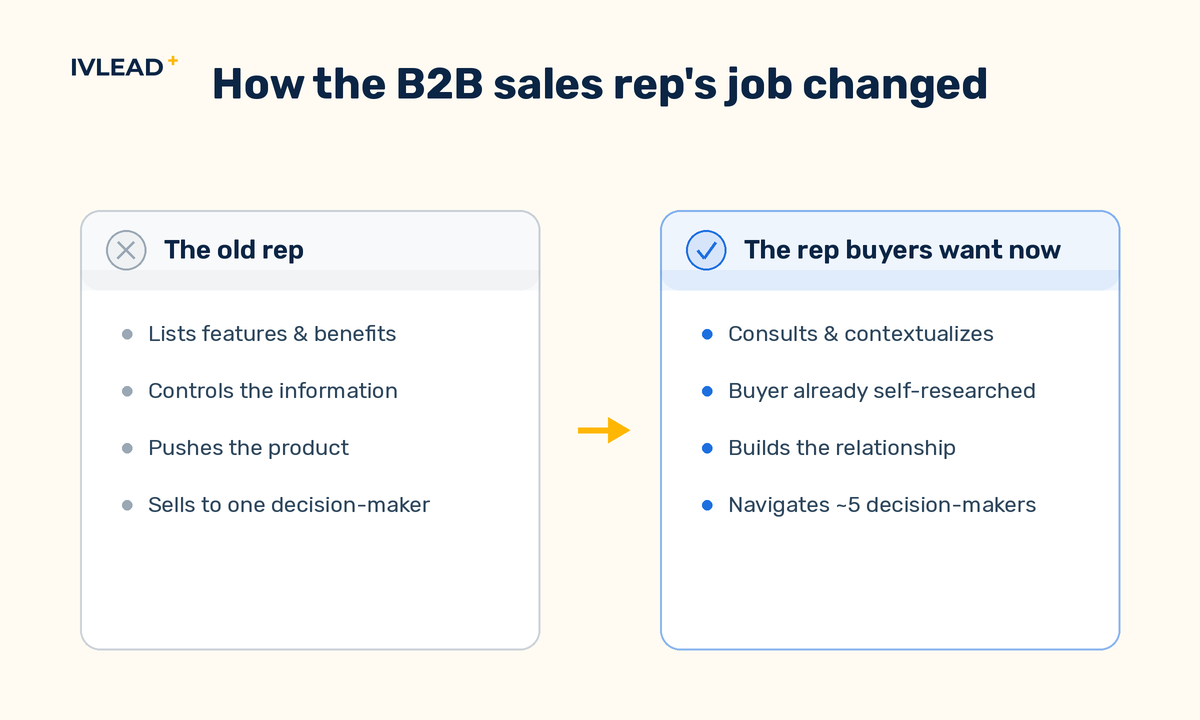
Reps used to win by demonstrating features and benefits. Today the buyer has usually done that homework before the first call — the vast majority research independently before talking to anyone — so leading with a feature tour wastes the one conversation you get. The modern rep behaves like a consultant: contextualizing the product for this buyer’s situation, quantifying ROI, and guiding a decision the buyer is already partway through making. The job moved from informing to helping decide.
What does the modern B2B buyer look like?
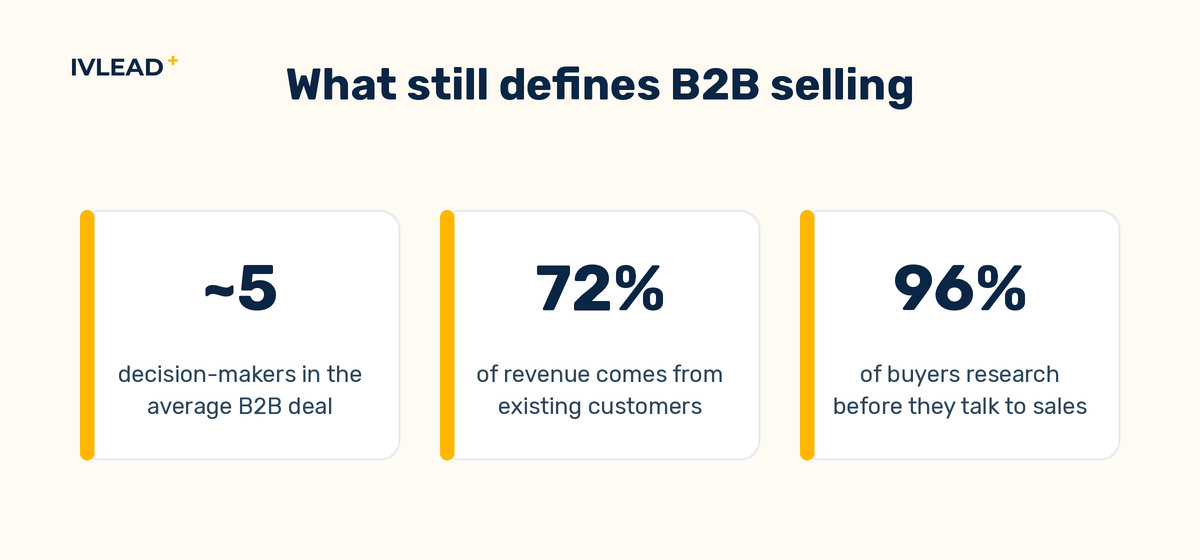
Informed, self-directed, and rarely alone. Buyers run much of the journey themselves — comparing tools, pricing, and reviews — and increasingly use AI to do it, which means they reach a rep already past the basics and wanting specifics. They also buy as a committee: the average B2B deal now involves around five decision-makers, each with different priorities. That changes the rep’s job from convincing one champion to equipping that champion to sell internally to four other people.
How are sales teams actually using AI?
For the work around the selling, not the selling itself. The highest-return uses are unglamorous: drafting and personalizing outreach, researching an account before a call, summarizing a prospect’s history, surfacing which leads are worth time today, and prepping for likely objections. The pattern that works is AI handling the admin and research so reps spend their hours in conversations — not AI replacing the conversation. Teams that point AI at the busywork consistently free up real selling time; teams that point it at the relationship tend to erode trust.
Why does customer retention matter more than ever for sales?
Because most revenue already lives in your existing base — roughly 72% of company revenue comes from current customers, not new logos — and those customers are also your best source of referrals, which remain one of the highest-quality lead sources in B2B. The implication for sales: closing isn’t the finish line. The teams that win treat the relationship after signature as part of the sales motion — regular check-ins, proactive value, and a clean hand-off to customer success — because that’s where the next deal and the next referral come from.
What still trips B2B sales teams up?
Two things, repeatedly. First, tool sprawl: teams accumulate dozens of apps that don’t talk to each other, so reps lose hours to double entry, data clean-up, and hunting for context that should be one click away. Consolidating onto a connected stack returns that time directly to selling. Second, sales–marketing misalignment: when the two run on different definitions and different data, lead quality drops and deals slip. Aligned teams — shared model, shared stages, one source of truth — consistently outperform, and the fix is often as simple as a shared CRM and a standing monthly sync.
What should a B2B sales team do about all this?
Build the motion around how buyers now buy: give reps the full account context before every conversation, automate the admin so their time goes to selling, align sales and marketing on one model, and extend the motion past the close into retention. None of that is a tooling fantasy — it’s what a well-configured CRM is supposed to deliver, and most teams already own the tool; they just haven’t set it up to work this way.
The IV-Lead take
Every one of these trends points at the same thing: selling now runs on context and connection, and both depend on the system underneath. A rep who can see the whole account — past conversations, what marketing sent, product usage, open issues — sells like a consultant. A rep flipping between six disconnected tools sells like it’s 2015. The trend isn’t “adopt AI” or “build relationships” in the abstract; it’s wiring your stack so your team can do both without friction. That’s the work we do.
Want your sales team selling the way buyers now buy — full context, less admin, marketing and sales on one model? Book a 30-minute audit. See how we approach sales automation and RevOps.
Frequently asked questions
How has B2B selling changed most?
The buyer now arrives informed and as part of a committee (around five decision-makers), so the rep’s job shifted from presenting features to consulting — contextualizing value and helping a group decide.
Is AI replacing B2B sales reps?
No — it’s replacing their busywork. The reliable wins are research, drafting, summarizing, lead prioritization and objection prep, which give reps more time for the conversations AI can’t have for them.
Why is retention a sales priority, not just a CS one?
Because roughly 72% of revenue comes from existing customers, and they drive your best referrals. Treating the post-sale relationship as part of the sales motion is where the next deal comes from.
What’s the biggest fixable drag on sales productivity?
Disconnected tools. Reps lose hours to double entry and missing context; consolidating onto a connected CRM returns that time to selling and is usually the fastest ROI available.